Professional Wholesale Pricing • Fast US Shipping

Opening a Salon: What New Owners Need to Focus On
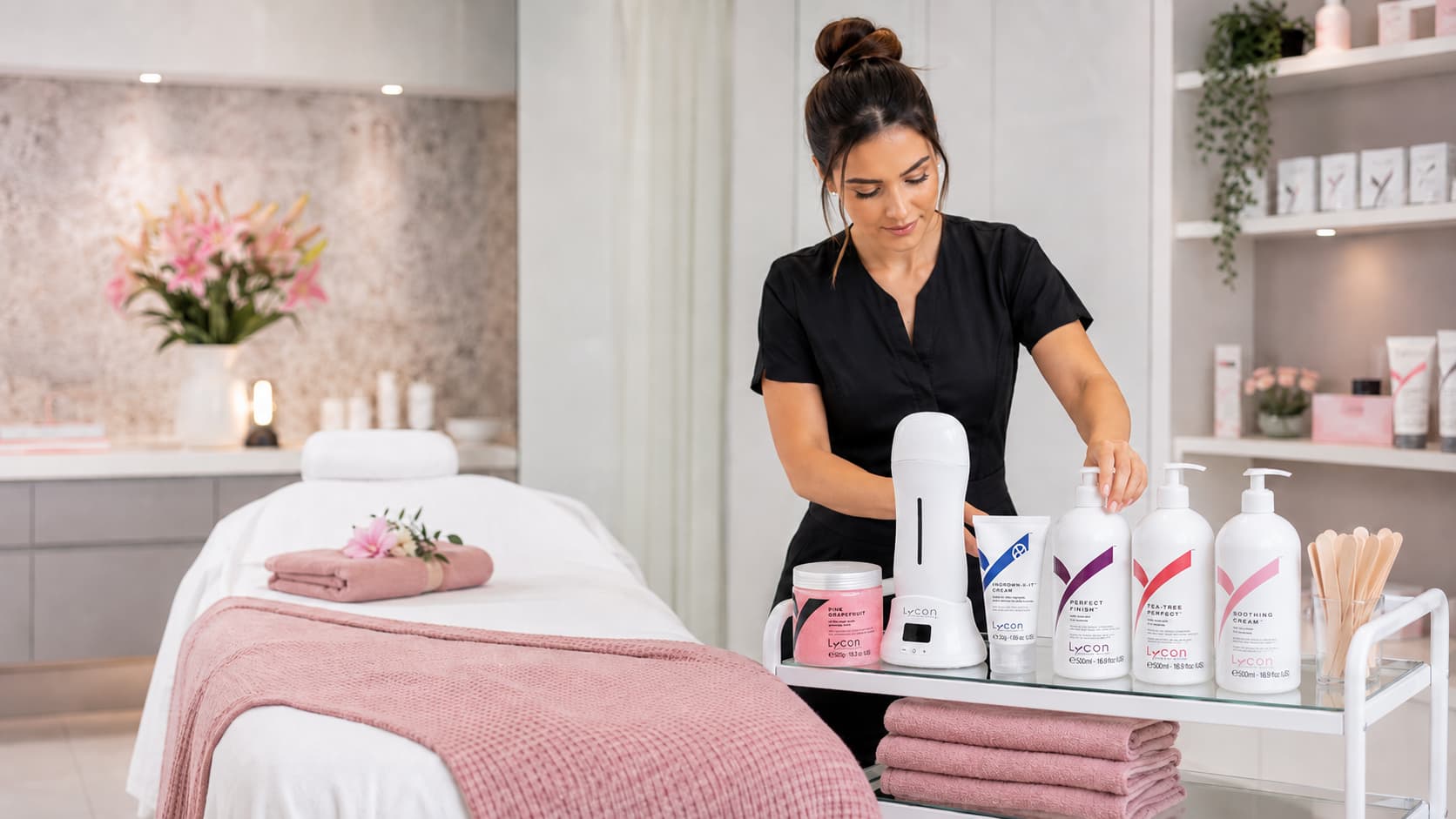
Opening a salon is one of the most empowering steps a beauty professional can take. It represents passion, vision, independence — and the chance to shape a client experience you truly believe in. But the moment you pick up the keys, you also step into a new role. You’re no longer only the expert behind the treatment table; you become the person steering the whole business.
Here’s where many new owners stumble: they focus on looking ready, not being ready. They pour time and money into decor, branding, and Instagram aesthetics, then scramble later to build the systems that keep clients coming back. The result is a beautiful space with inconsistent operations, a shaky foundation that makes growth stressful and unpredictable.
A strong start is not about looking ready; it’s about being ready. That means building confidence, consistency, and clarity into your business from day one, so every new client has a reason to return and refer. If you’ve been considering this step for a while, what it truly takes to transition to owning your own spa or wax bar is worth exploring before you begin.
The Shift from Technician to Owner
Becoming a salon owner fundamentally shifts your role. You move from being a service provider to a decision-maker. While you may still perform treatments, your responsibilities expand to include setting direction, managing resources, and maintaining standards across the business. This means making informed decisions around pricing; ensuring your rates reflect your skill, time, and costs while remaining profitable. It also involves structuring your time effectively, designing a client experience that is both consistent and memorable from consultation through to aftercare, and, if you have a team, leading through hiring, training, and cultivating a culture of consistency.
This transition also requires a mindset shift. Working in the business is about delivering services, while working on the business involves building systems, reviewing performance, and making strategic decisions that create long-term growth. Many new owners naturally gravitate toward the familiarity of hands-on work, often postponing the less visible but equally critical tasks of business development.
To maintain balance, it is important to actively protect your role as an owner. Setting aside dedicated “CEO time” each week, even 90 minutes, allows you to review finances, refine processes, and plan marketing activities. Establishing clear decision filters can also prevent reactive choices; before introducing a new service or making a purchase, consider whether it improves consistency, aligns with your focus, and has the potential to generate a return within a defined timeframe. Equally important is protecting your own energy by structuring your schedule thoughtfully; grouping similar services, allowing for adequate breaks, and limiting daily bookings to maintain both quality and sustainability.
Technical skill may be what gets a business started, but it is strategic thinking and consistent decision-making that ensure it continues to grow.
Choosing the Right Services to Start With
The natural instinct when launching a salon is to offer as many services as possible in order to attract a wide range of clients. While this is understandable, a broad menu from day one often leads to overwhelm, operational complexity, and inconsistent results. A more effective approach is to begin with a focused selection of services and build a reputation for delivering a few treatments exceptionally well.
Choosing the right starter services requires a balance of market awareness and self-assessment. It is important to consider local demand by observing nearby salons, common client requests, and seasonal trends. Equally important is selecting services where you can consistently deliver high-quality results with confidence. Prioritizing treatments with natural maintenance cycles, such as waxing, brows, and maintenance facials, also supports repeat business and steady revenue. In the early stages, depth is far more valuable than breadth.
A strong starting point is to build your offering around one or two signature services that define your expertise, supported by a small ecosystem of maintenance treatments that naturally complement each other. For example, brow shaping or Brazilian waxing can serve as core services, while treatments such as underarms, legs, or brows can be combined into efficient, stacked appointments. Thoughtful add-ons, such as soothing post-wax care or brow tinting, can enhance results and increase value without complicating operations.
Before adding any service to your menu, it is helpful to ask a few practical questions: Can this treatment be delivered consistently at a high standard? Is there a clearly defined protocol and timing? Are all necessary products and tools readily available through reliable suppliers? Does the service encourage regular rebooking? These considerations ensure that every offering contributes to a stable and sustainable workflow.
A focused launch menu might include a signature brow package with mapping and shaping, a Brazilian or bikini waxing service with a defined protocol and post-care, and a combination treatment such as underarm and half-leg waxing. Complementary add-ons like brow tinting, lip waxing, or a soothing post-care mask can be offered to enhance the experience.
This streamlined approach keeps inventory manageable, service timing predictable, and results consistent. Most importantly, it allows you to deliver a high standard of work from the beginning, building trust and growing your business through reputation rather than complexity.
Why Confidence and Consistency Matter More Than Aesthetics
It is easy to associate professionalism with beautiful interiors, polished branding, and an Instagram feed that looks like an editorial. While aesthetics certainly contribute to the overall impression, they are not what sustain a business. What truly drives client loyalty is consistency in results and confidence in delivery. Clients return because they trust that each visit will meet the same high standard; they remember a smooth consultation, a calm and controlled service, clear communication, attention to hygiene, and results that last. From their perspective, the decision is simple: they come back for how the experience felt and the outcome it delivered, not for the decor.
To achieve this level of consistency, it needs to be built into daily operations. This starts with clearly defined service protocols that cover every step, from preparation and consultation to product timing, hygiene checkpoints, and aftercare. Timing should also be standardized, with realistic start-to-finish durations that include buffers, allowing services to flow smoothly without unnecessary pressure. Practicing consistent communication, using the same consultation questions, consent explanations, and aftercare guidance helps create a predictable and reassuring experience for every client.
Tracking outcomes further strengthens this process. Taking consistent before-and-after photos, with client consent, noting sensitivities, and recording product choices all contribute to more personalized and effective future visits. Ultimately, a simple, well-organized space that delivers excellent, reliable results will always outperform a visually impressive environment with inconsistent service. A clean, comfortable, and calm treatment room is enough; what matters most is the quality of the work and the systems that support it.
Mistakes That Cost Time and Money
Avoid these early traps that seem harmless but compound into bigger problems over time:
- Overinvesting in equipment before demand is proven — Don’t buy machines or extensive stock “just in case.” Start with essentials that support your focused menu. Add equipment once appointments and prebooks justify the spend.
- Underpricing services and attracting the wrong clientele — Low prices can fill your calendar with clients who are price-driven and inconsistent while burning you out. Set pricing that respects your time and covers costs. A simple formula: Service Price = (Product Cost + Time Cost + Overhead Allocation) + Profit Margin. Revisit pricing once you achieve consistent retention and rebook rates.
- Skipping structured protocols (prep, hygiene, aftercare) — Cutting corners might save five minutes today but costs reputation and revenue tomorrow. Define your non-negotiables and follow them to the letter.
- No clear service timing, leading to delays and stress — If you don’t time your steps, your calendar becomes unpredictable. Define exact durations, include a buffer, and schedule accordingly.
- Trying to do everything alone without support or training — You don’t need a big team, but you do need support. A booking system, an accountant (or at least bookkeeping structure), a mentor, or targeted training can save you from expensive missteps.
These mistakes don’t usually explode in week one, but they compound. Six months later, they show up as thin margins, inconsistent reviews, and constant catch-up. Prevent the spiral with strong basics now.
Thinking Long-Term from Day One
The salons that stand the test of time are not built on initial momentum alone — they are built on systems. Starting small is perfectly acceptable, but starting with structure is what creates long-term stability. Establishing clear systems early on ensures consistency, supports growth, and prevents the need for constant correction later.
This begins with defining the core elements of your operations. Service protocols should outline each step of the treatment, including timing, product usage, and sanitation checkpoints. Hygiene standards need to be clearly set, with routines for sterilization, visible sanitation stations, and simple audit checklists to maintain consistency. A structured consultation process covering intake forms, contraindications, patch testing where necessary, and informed consent, ensures both safety and professionalism. Aftercare should also be standardized, combining clear verbal guidance with written instructions and recommended follow-up timing.
Creating repeatable experiences is equally important. Every client interaction, from greeting to consultation to the final step of the service, should feel consistent and well-executed. Checklists are a practical tool in achieving this; they help maintain quality on busy days and provide a reliable framework when training new team members.
Thinking beyond the initial appointment and focusing on retention is what drives sustainable growth. Encouraging clients to rebook before they leave, supported by clear guidance such as a recommended return every four to six weeks, helps establish routine. Introducing a simple three-visit journey where the first visit sets the baseline, the second refines the result, and the third solidifies the routine, can further strengthen client commitment. Tracking key performance indicators such as conversion from new to returning clients, retention over specific timeframes, prebooking rates, average spend, and client reviews provides valuable insight into how well the business is performing.
Ultimately, small operational decisions have a significant long-term impact. Clear cancellation policies, reliable reminder systems, and simple post-visit follow-ups can improve retention more effectively than increased advertising. When systems are in place from the beginning, they create a foundation that supports both consistent service and sustainable growth. For 5 proven ways to grow your waxing business, that foundation is where everything starts.
The Role of Training from the Start
Training should never be treated as something to address later — it is a multiplier from the very beginning. Even for solo professionals, a focused training plan can significantly improve performance by refining technique, building confidence, and keeping skills aligned with current standards. Small inefficiencies in application, timing, or process may seem minor, but when corrected, they lead to faster services and better results. (For a practical breakdown of the most common technique gaps, see: 7 Waxing Mistakes Professionals Don’t Realize They’re Making.) At the same time, a strong understanding of protocols creates a calmer, more consistent delivery, which clients immediately notice. Ongoing training also ensures relevance, helping professionals stay up to date with evolving products, safety requirements, and client expectations.
When a team is involved, training becomes even more critical. It is the foundation for consistency and culture, ensuring that every service meets the same standard regardless of who performs it. Without structured training, variability increases and quality becomes unpredictable. With it, expectations are clear and repeatable. For a full exploration of how training impacts team stability and growth, see: Why Training Helps Beauty Teams Stay, Perform, and Grow.
Integrating training into operations does not need to be complex. A simple 90-day plan can provide structure, focusing on one core technique each month while incorporating regular refreshers on hygiene and client experience. Defining what “ready to serve” looks like through clear competency checklists and timing benchmarks helps maintain standards. Combining shadowing with feedback, and reviewing both timing and quality metrics together, allows for continuous improvement. Even from a financial perspective, the return is tangible. If training reduces the need for corrections and improves client retention, it can quickly pay for itself within a matter of months.
Ultimately, investing in training early prevents more costly corrections later. It is far more efficient to build strong, consistent habits from the start than to repair gaps in technique or rebuild client trust over time.
Building a Business Clients Trust
Trust is the most valuable currency in any beauty business. While clients may not be able to evaluate every technical detail of a service, they can immediately sense professionalism through the experience you create. This trust is built through a combination of clear communication, visible hygiene, and consistent results. Explaining what you are doing and why helps set expectations and reassures the client throughout the process. Maintaining visible, organized sanitation practices signals safety and care, while delivering the same high-quality outcome each visit creates reliability that clients come to depend on.
First impressions play a crucial role in establishing this trust. A structured consultation, supported by thoughtful questions, allows you to understand the client’s goals, sensitivities, and routines while demonstrating professionalism from the outset. During the service, following a consistent flow — from preparation to procedure, check-ins, finishing, and aftercare — creates a sense of control and attention to detail. Providing clear aftercare guidance, both verbally and in written form, ensures clients leave informed and confident about maintaining their results.
Professionalism should be felt naturally rather than explicitly stated. A clean, calm, and well-organized workspace sets the tone immediately. Using the client’s name, confirming preferences, and summarizing the plan at the beginning of the service adds a personal and thoughtful touch. Offering choices, such as selecting the most suitable wax type for sensitivity, and explaining the benefits in simple terms reinforces expertise without overwhelming. Following up within 24 to 48 hours with a brief message thanking the client, reminding them of aftercare, and suggesting an ideal timeframe for their next visit, further strengthens the relationship.
These small, consistent actions create a lasting impression. When clients feel cared for and confident in your approach, they are far more likely to return and recommend your services to others. That sense of trust is what transforms a one-time appointment into long-term loyalty and ongoing referrals.
Start Simple, Start Strong
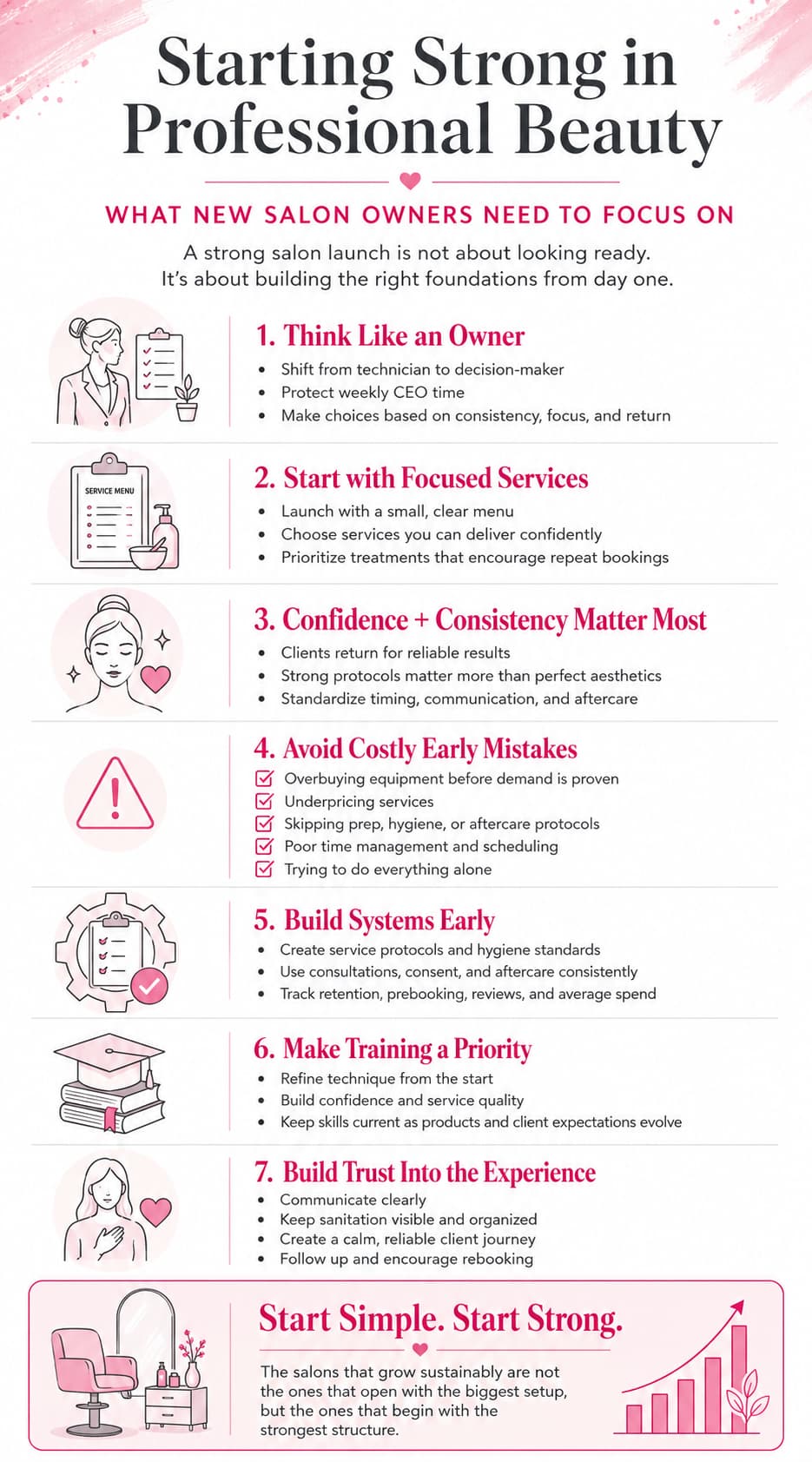
You don’t need everything in place to open successfully; you need the right foundations. A focused service menu that showcases your strongest work, pricing that supports sustainability, clearly documented protocols, protected timing, and early investment in training are what set the stage for long-term success. Above all, the client experience should feel calm, consistent, and clear at every step.
This approach is built on three core pillars. Consistency ensures that every client receives the same high standard of service, every time. Clarity means expectations, timing, and aftercare are communicated simply and confidently. Confidence ties it all together: owning your process, your expertise, and your pricing from consultation through to the final result. These elements create a professional experience that clients can trust and return to.
The salons that succeed are not the ones that launch with the biggest setups, but the ones that start with the strongest structure. Investing in systems rather than just aesthetics allows for predictable results, smoother operations, and a reputation that grows through client experience rather than marketing alone. Retention and reputation become the true drivers of growth, far outweighing any initial visual impression.
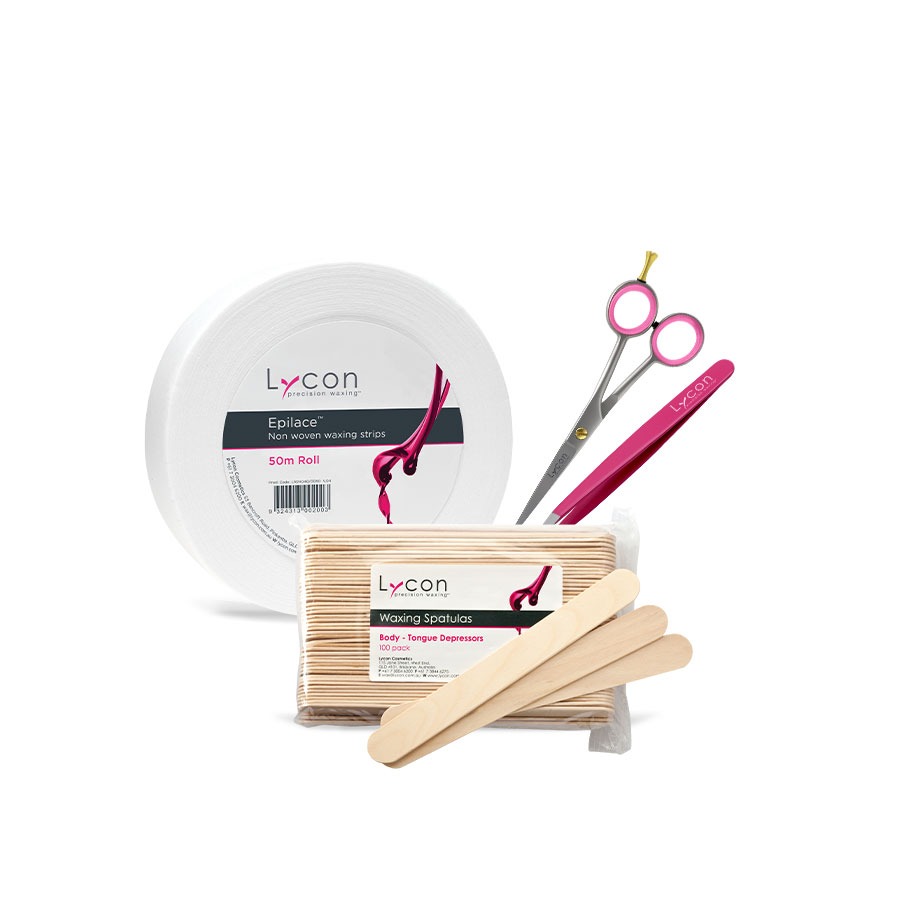
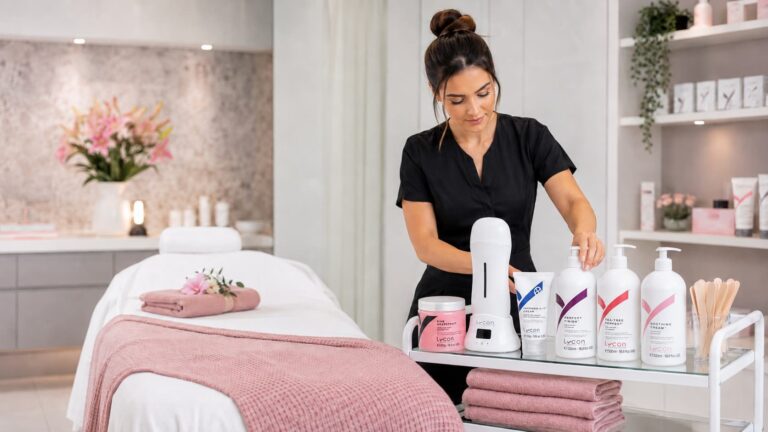
Starting strong also means equipping yourself with the right tools from the beginning. When your setup is streamlined and your products are reliable, your workflow becomes more efficient, your results more consistent, and your confidence stronger day after day. A curated starter pack for professional waxing or salon setup can provide exactly that — essential tools and products selected to support performance, efficiency, and high-quality outcomes.
Exploring a structured starter solution allows you to replace overwhelm with clarity and build your business on solid ground from day one. With the right foundations in place, both you and your clients will feel the difference immediately — and that difference is what sets everything in motion.













Related Posts


Australia’s #1 wax worldwide. Premium professional waxing solutions trusted by estheticians in 70+ countries since 1978.
- info@lyconusa.com
- +1 855 890 2984
- United States
© 2026 LYCON USA. All rights reserved.