Professional Wholesale Pricing • Fast US Shipping

The Long Game in Professional Beauty: How to Build a Career That Lasts
The first years in professional beauty feel electric. You’re building your book, learning new techniques, and soaking up the buzz of a busy treatment room. Then a few years pass. The physical demands start to show up in your wrists and back. The constant client-facing energy feels heavier by Friday. You’re trying to keep up with trends while delivering consistent results, day after day. And you start to ask the most important question of your career: How do I make this sustainable?
Here’s the truth that anchors a lasting career: Success in beauty is not about how fast you grow but how long you can sustain it. When you start building with longevity in mind, everything else, reputation, income, opportunities, compounds.
Beyond the First Years
The newness of our industry is intoxicating. You get certifications, test new products, and master core techniques. But beauty is also a hands-on profession with real demands. The pace is quick. The work is detailed. Consistency matters. That combination means sustainability must be intentional. The professionals who last aren’t just talented, they are strategic. They organize their work around energy, ergonomics, and efficiency. They protect their standards. They learn continuously.
If you want a career that can thrive for a decade or more, your daily choices, how you schedule, price, learn, and communicate, matter just as much as your artistry.
Longevity in Hands-On Professions
Physical reality is the foundation. This work asks you to stand for hours. Repetitive motions challenge your wrists, thumbs, shoulders, and lower back. Posture can drift. Lighting can strain your eyes. Over time, small inefficiencies become big issues.
There’s also the mental load. High-energy, client-facing roles demand emotional presence with every appointment. From consultations to aftercare, you hold space for people. You are the calm in their busy day and that takes energy.
What longevity really requires:
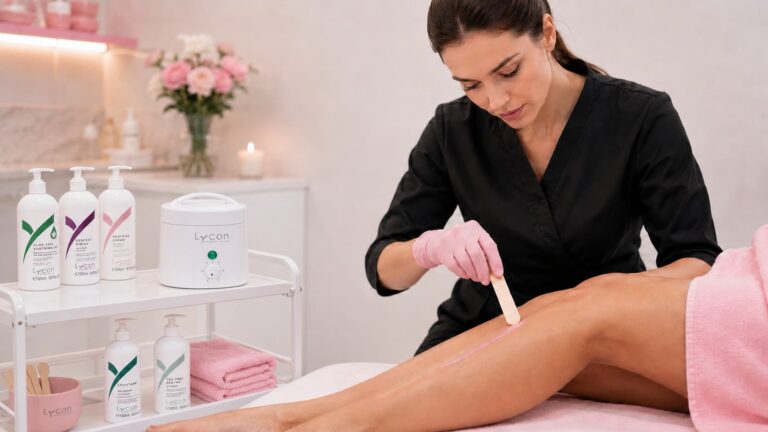
- Technique efficiency: The more refined your technique, the fewer corrections you need, the smoother your appointments run, and the less physical effort each service takes. For example, in waxing, use the right wax for the right area, keep your pot at a consistent temperature, master application thickness and direction, and perfect your pressure and stretch. One clean application and one clean removal beat multiple touch-ups that tire your body and extend your day.
- Body awareness: Work with a neutral spine, stacked joints, and relaxed shoulders. Alternate your lead leg and working side to avoid overloading the same muscles. Bring your client to you: adjust table height, use a rolling stool for certain angles, keep your trolley at arm’s reach, and invest in lighting that reduces eye strain.
- Smart scheduling: Group similar services to limit repetitive setup and teardown. Add five-minute resets between clients to hydrate, stretch, and sanitize mindfully. Slot admin and inventory into dedicated blocks instead of squeezing them into late evenings.
Your body is part of your business, how you use it determines how long you can work. Build systems that honor it.
Avoiding Burnout Before It Starts
Burnout doesn’t arrive overnight, it tends to whisper first. The early signs are easy to overlook: persistent fatigue that doesn’t improve even after rest days, a gradual loss of motivation or creativity, rushing through services just to get to the end of the day, or that familiar feeling of dread on Sunday nights. Sometimes it shows up as irritation over small client requests that wouldn’t normally bother you. These signals aren’t random; they’re indicators that something in your workflow or structure needs attention.
In the beauty industry, the causes are often structural rather than personal. Overbooking is one of the most common, saying yes to every request and leaving no space for resets or recovery. Underpricing creates another layer of pressure, forcing you to work at an unsustainable pace just to maintain income. A lack of boundaries can also take a toll, especially when your calendar is driven by last-minute messages, late arrivals, or unrealistic client expectations. Over time, these patterns don’t just affect your energy, they affect the quality of your work and your relationship with clients.
The good news is that burnout is preventable with deliberate adjustments. Start with realistic service timing: review how long your services actually take and build in a 10-15% buffer for preparation and aftercare. It’s far more effective to run a calm, on-time schedule than to spend the day catching up. Build breaks into your day intentionally; short pauses between clients and at least one longer break to recharge. These aren’t luxuries; they’re part of maintaining professional performance.
It’s also important to define sustainable workload limits. Decide how many services you can perform in a week while maintaining both quality and wellbeing, and once you reach that limit, offer the next available slot rather than overextending yourself. Pricing plays a critical role here as well. If your current pricing requires constant intensity just to stay afloat, it needs to be adjusted. Your rates should reflect product costs, time, overhead, and a healthy margin, because transparent value is far more sustainable than silent exhaustion. For practical guidance on improving business efficiencies and structuring your operations, it’s worth building that foundation early.
Finally, boundaries should be treated as part of the service, not separate from it. Clear cancellation policies, structured rebooking, and defined communication hours create a better, more predictable experience for clients as well.
The most important shift is this: burnout isn’t something you’re expected to endure. It’s a signal that something needs to change. When you treat it as feedback rather than failure, you give yourself the opportunity to build a career that’s not only successful, but sustainable.
The Power of Becoming a Specialist
The early-career instinct is to do everything. But when you try to master every service at once, your skill development dilutes and growth slows. Specialization accelerates both your skill and your brand.
The advantage of specialization:
- Deeper expertise: Repetition in a focused area builds mastery faster. You spot nuances others miss, and your results speak for themselves.
- Faster services: Refined technique means better timing without rushing, efficiency that reduces strain.
- Stronger reputation: Specialists are remembered; generalists are replaceable. When someone thinks brows, waxing, or skin, you want them to think of you first.
Examples to consider:
- Waxing specialist: Known for speed, comfort, and impeccable hygiene and technique. (See: 7 Waxing Mistakes Professionals Don’t Realize They’re Making for the small habits that separate good from exceptional.)
- Brow expert: Recognized for design, symmetry, and tailored tinting.
- Skin-focused therapist: Trusted to build long-term plans that deliver visible results.
How to choose and build your niche:
- Look for the intersection of what you love, what you’re good at, and what your market needs.
- Create a signature service with a clear promise and process. Name it. Own it.
- Document your protocol so it’s repeatable and measurable.
- Curate your education toward your specialty.
- Update your menu, bio, and social proof to reflect your focus.
When your niche clarifies, your marketing simplifies, your referrals sharpen, and your technique improves on autopilot because you’re practicing with intention.
Building Authority Over Time
Authority is not built overnight. It’s earned quietly, through repetition and reliability. People return to professionals they trust, and that trust is built over time through consistent results, clear communication, and a sense of experience they can rely on every visit.
What builds authority day by day are the small, disciplined actions that shape the client experience. Confident communication plays a central role: leading the consultation, setting clear expectations about the service, the sensation, and the aftercare, and offering choices within professional boundaries. Client education is just as important. Explaining what you’re doing and why reassures clients and helps them feel involved in the process. When they understand what’s happening, they become active participants in their results.
Visibility also matters more than many professionals realize. Letting clients see your standards in action — fresh disposables, clean tools, gloves, no double-dipping, protected surfaces, and a well-organized trolley — creates an immediate sense of professionalism. These details may seem small, but they shape perception in a powerful way.
Over time, it’s the consistency of these small actions that compounds. Explaining each step as you go, especially during transitions, helps maintain clarity and trust. Providing simple, written aftercare with a few clear non-negotiables reinforces your expertise. Keeping your space clean, calm, and consistently organized builds familiarity. Showing up on time, every time, signals reliability. Documenting your work with before-and-after photos, always with consent, allows you to track and demonstrate your results.
Authority isn’t created through big moments, it’s built through attention to detail. Over months and years, those details become your signature, the reason clients trust you, return to you, and recommend you to others.
What Sustainable Success Really Looks Like
Sustainable success isn’t about being fully booked and exhausted, or running a schedule that forces you to sprint from open to close. It’s about creating a rhythm that allows you to deliver your best work consistently, day after day, without compromising your energy or standards.
In practice, this looks like a business built on steady, repeat clients, where prebooking is strong because your work naturally earns it. Your schedule feels controlled, with clear structure and intentional white space; you know when you start, when you stop, and when you rest. Income becomes more predictable as well, with the majority of your revenue coming from returning clients rather than one-off promotions or last-minute bookings.
There are also clear signs that you’re on the right track. Clients rebook regularly and refer others with confidence. Services feel smooth and well-paced, and you leave each appointment feeling satisfied rather than depleted. You still enjoy the work; curiosity, pride, and engagement are part of your daily experience. Even your numbers begin to reflect this balance, with a schedule operating at around 70-85% capacity, built-in buffer time of 10-15%, and a steadily improving rebooking rate.
If your current reality doesn’t match this, it’s worth stepping back and looking at the bigger picture. The goal isn’t to chase a single “big month” or short bursts of intensity. It’s to build a career you can sustain and enjoy long-term, one that feels just as fulfilling in year ten as it did in year two. If you’re starting your salon journey, building these habits from day one makes all the difference.
The Role of Training in Career Longevity
Continuous learning isn’t optional in a hands-on field; it’s oxygen. Training keeps your skills sharp, prevents bad habits from settling in, and improves efficiency in ways that directly impact both your body and your clients. Every time you refine your technique, your work becomes smoother, less physically demanding, and more rewarding to deliver.
Its value shows up in very practical ways. Training helps prevent bad habits, especially the small shortcuts that tend to stick over time and gradually lower your standard. It also drives efficiency; better technique means fewer extra passes, less rework, and less unnecessary strain. At the same time, it builds confidence. When you truly understand what you’re doing and why, you communicate more clearly, price more confidently, and create stronger client trust and retention.
Over the long term, these improvements compound. Better body mechanics, hand positioning, and product use reduce physical strain and support longevity in your career. Precision leads to better results with less effort, making your day more manageable and your schedule more sustainable. (For a deeper look at how training shapes team culture and retention, see: Why Training Helps Beauty Teams Stay, Perform, and Grow.)
Building a consistent training rhythm doesn’t need to be complicated. Setting a quarterly learning goal, focusing on one technique to sharpen and one protocol to streamline, creates clear direction. Filming your work, with proper consent and privacy standards, allows you to analyze posture, hand placement, and flow in a way that’s difficult to see in real time. Scheduling short, focused practice blocks to refine specific movements can lead to noticeable improvements quickly. Complementing this with brand-led education and regular technique refreshers ensures you stay aligned with best practices while continuing to evolve.
Ultimately, the more refined your technique becomes, the easier your work feels. That’s not just a benefit, it’s the foundation of a long, sustainable career.
Thinking in Years, Not Months
There’s a difference between a short-term hustle and a long-term career. The hustle mindset can get you started; the long-game mindset keeps you healthy, respected, and profitable.
The question to ask as you make decisions: Can I sustain this pace for 5–10 years?
If the answer is no, redesign. Build habits that compound:
- Price correctly: Align your rates with your expertise, time, and costs. Raise gradually and communicate your value clearly.
- Manage time like a pro: Protect setup, cleanup, and micro-breaks. Cluster similar services. Automate where possible: reminders, rebooking prompts, and policies.
- Invest in skills: Choose courses that support your niche and improve efficiency. One well-chosen training can upgrade your results for years.
Think of your career like skincare: daily habits, consistency, and patience beat dramatic, sporadic sprints every time.
Play the Long Game
The professionals who last don’t rely on luck. They build systems around their energy. They refine constantly. They educate with care. They keep their standards visible and their boundaries kind but clear. And they understand that authority doesn’t arrive all at once, it accumulates with every excellent, predictable experience they deliver.
A strong career is built in rhythm. Set a pace you can keep. Choose focus over frenzy. Let your technique do more of the heavy lifting. When you play the long game, your work gets easier, your clients get better results, and your reputation becomes the kind that sustains you.
Ready to refine your technique, protect your energy, and build authority that lasts?
👉 Sign up to the LYCON newsletter
You’ll receive professional insights, technique refinement tips, and industry perspective tailored to hands-on beauty professionals who are serious about the long game.


Related Posts


Australia’s #1 wax worldwide. Premium professional waxing solutions trusted by estheticians in 70+ countries since 1978.
- info@lyconusa.com
- +1 855 890 2984
- United States
© 2026 LYCON USA. All rights reserved.